
|
Written by Christopher Russell, Advertiser, Business Editor |
|
Tuesday , 15 September 2009 |
IF the stars above the Nullarbor stay favourably aligned, South Australia's next major mine will be operating before the end of this year.
"We've got a pretty fair chance of starting before Christmas," the South Australian head of Iluka Resources, Hans Umlauff, said of the company's mineral sands project in the state's Far West.
If Iluka achieves this goal, it will have built its mine nearly six months ahead of schedule and up to $20 million below its budget of $420 million.
It will be a remarkable achievement in an extremely remote part of the state and forges new frontiers for the mining industry.
It is the first mine to be built within a regional reserve - under stringent environmental guidelines - and signals the opening up of a new mining province for the state, the Eucla Basin northwest of Ceduna.
The mine, Jacinth-Ambrosia, is 85 per cent complete with components commissioned as they are built.
Construction proceeded rapidly after Iluka received a mineral lease in July last year and the company set a target of opening in the first half of 2010.
"Urgency has been a driver," said Mr Umlauff, Iluka's general manager, SA development and project management.
"There's always pride in finishing a job on time but there are some real advantages for us to be able to have the project finished as quickly as we can."
The earlier you finish, the less it costs. There's also a real focus on building a business, not just a collection of equipment.
"The business has to be sustainable, we're looking for a very low-cost operation."
"This is the flagship operation for Iluka for the next 10 years plus."
Jacinth-Ambrosia will become the world's largest supplier of the mineral zircon, used in ceramics and tiles, and is expected to enjoy surging demand from the urbanisation of China and India.
Mineral Resources Development Minister Paul Holloway said Jacinth-Ambrosia was the first of several prospects targeting ancient sea beaches for heavy minerals.
"The prospects are that the Eucla Basin will be a major new province and become the centre of Australia's mineral sands industry for the next 50 years," he said.
"There's Tripitaka, Gulliver's and a whole lot more prospects once this operation is running." Ceduna mayor Allan Suter said Jacinth-Ambrosia had given a tremendous boost to the local economy and been welcomed by the community.
"It's insulated us to some degree from the global recession," he said.
"Iluka has been spending serious amounts of money in the area.
"They've employed a lot of local businesses as subcontractors."
Iluka expects to come in under the amount budgeted by its board. There's not too many mines these days that can say that," SA Chamber of Mines and Energy chief executive Jason Kuchel said. Mr Umlauff said the economic downturn had actually helped by giving Iluka "the opportunity to drive some good bargains".
The last major piece of equipment is a mining unit plant built in WA and scheduled to arrive before the end of this month.
The plant is a trap into which the ore body sands are bulldozed and from which ore is then pumped to the processing plant as a slurry.
Building the mine had been a challenge, Mr Umlauff said.
"At the time we started, there was absolutely nothing here," he said.
"Our remoteness has actually been quite a big burden. Half of our capital cost is in infrastructure - roads, water, an airfield, camps, communications."
Iluka has sought local firms as contractors rather than multinationals where possible.
These include Lucas Earthmovers from Brighton for civil works, Kermans from WA for mechanical and Robin Johnson Engineering from Morphettville for electrical.
Building the mine is a partnership between Iluka and global engineering firm Parsons Brinckerhoff through its Adelaide office.
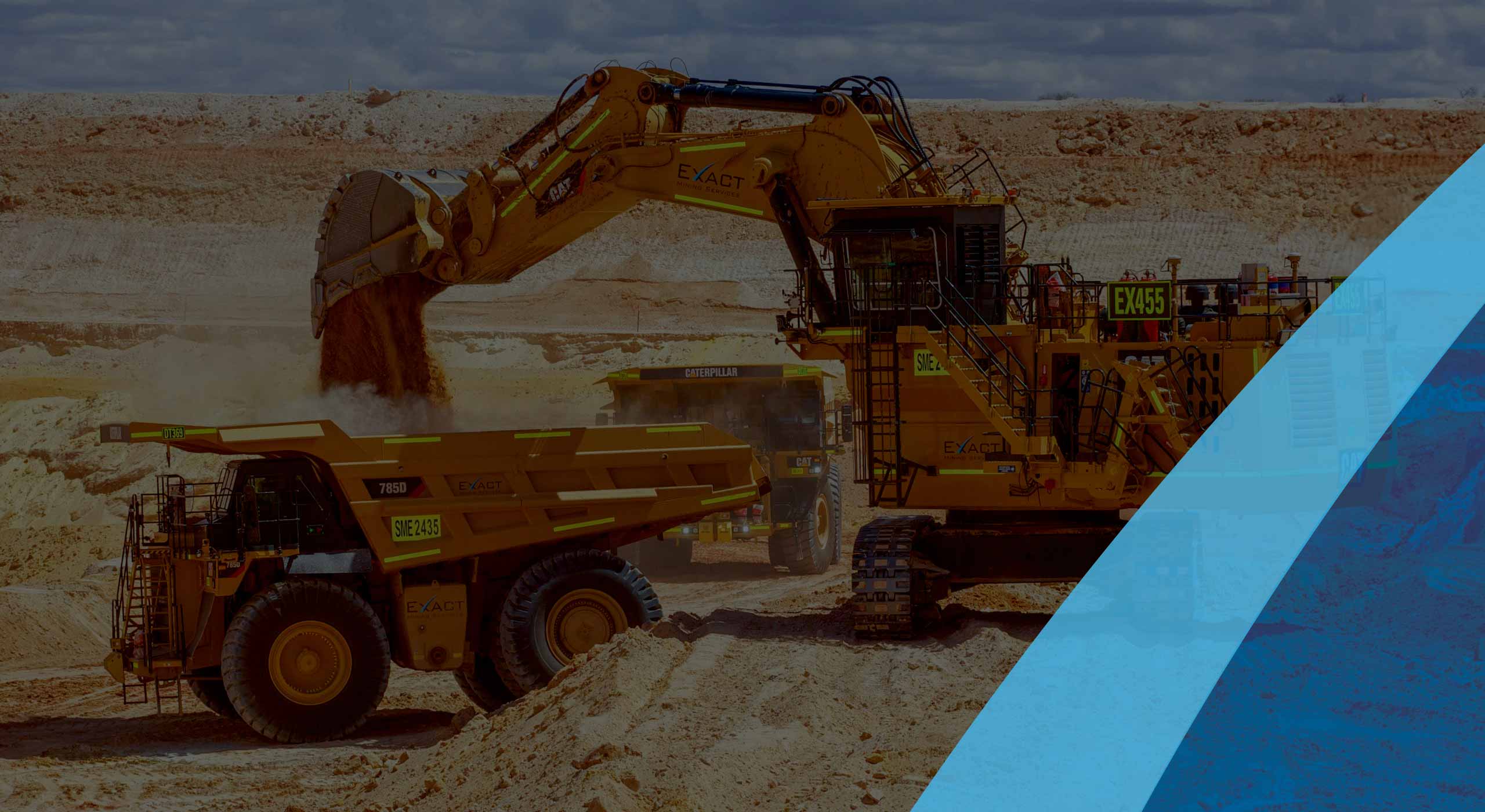
Mining has been contracted to Wayville company Exact Mining and Adelaide's Built Environs has made a storage facility at Thevenard from where concentrate will be exported to Iluka's existing WA processing plant. Burton-based Osmoflo runs the on-site desalination plant and the water pipeline was laid by BJ Jarrad of Royal Park.
An unexpected obstacle in laying the pipeline to the borefield was the one problem which threatened to derail the project. Half way to the borefield, limestone rock was discovered just below the surface instead of the soft sands covering the rest of the area.
While this slowed progress, blasting of the rock cleared a path.
"That was the one moment we had doubts we could do this," project manager Allen Cauvin said.
|